
Stop Changing Everything Every Time Progress Slows
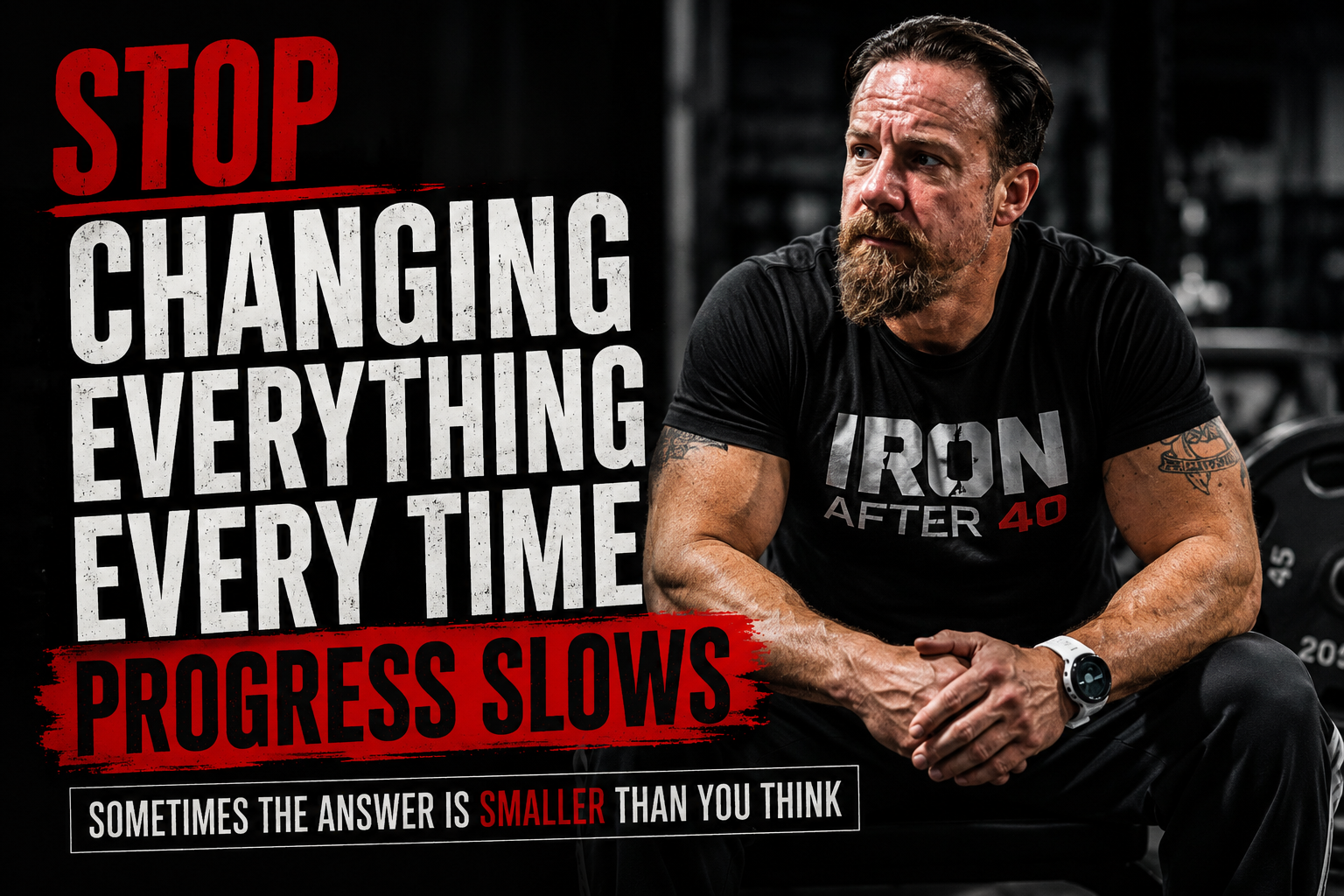
Something I see a lot with people who have been training for a while is the tendency to take action the second progress slows down or the pattern shifts slightly.
I get it. You’re putting in the work. You’re showing up. You’re trying to do the right things. Then things start to flatten out or don’t flow as it did before. The scale stops moving. Strength stalls. The mirror doesn’t change much. Workouts feel a little more hit or miss.
So naturally, the first instinct is to change everything.
New split. New exercises. More cardio. Less food. More volume. Different program. Different supplement.
Something has to change, right?
Maybe. But probably not everything.
That’s where a lot of people get themselves in trouble. They assume a slowdown means the whole plan is broken, when most of the time, it’s one or two small things that have drifted just enough to start holding everything back.
Maybe fatigue has crept up a little too high. Maybe there are a few too many hard sets. Maybe nutrition is close, but not consistent enough. Maybe sleep has been slipping. Maybe weekends keep erasing weekdays. Maybe there’s no real progression built into the training.
Nothing dramatic.
Just enough to slow the whole thing down.
And because none of those things feel like a big issue by themselves, people miss them. Then they throw out the entire plan.
That usually creates more problems than it solves.
Because now you’re starting over again. New exercises to learn. New volume to adapt to. New soreness. New recovery demands. New variables everywhere.
And after a few weeks, it’s hard to tell what’s actually working.
That’s one of the biggest issues with constantly changing things. You never stay with anything long enough to understand it.
Training after 40 requires a little more patience than most people want to admit.
Not passive patience. Not just sitting around waiting for magic to happen. But enough patience to actually look at what’s happening before you start making big changes.
Sometimes the answer is not a new program.
Sometimes it’s pulling back two sets per week. Sometimes it’s keeping your compound work a little further from failure. Sometimes it’s tightening protein. Sometimes it’s getting your weekends under control. Sometimes it’s taking the deload you’ve been avoiding.
And sometimes it’s just tracking long enough to know whether you’re actually doing what you think you’re doing.
That’s not exciting.
But it works.
The hard part is that small adjustments don’t feel as satisfying as a full reset.
A new program feels like momentum. A new diet feels like control. A big change feels like you’re doing something.
But sometimes all you’re doing is creating new chaos.
That’s why I like looking for the smallest adjustment that could explain the problem first.
If strength is stalling, is fatigue too high? If fat loss has stopped, are calories actually where you think they are? If joints are irritated, are you pushing too close to failure too often? If workouts feel inconsistent, are you actually recovering between sessions?
That’s where the answer usually starts.
Not always.
But a lot of the time.
Most people don’t need to blow up their entire setup. They need to stop long enough to figure out what part of it isn’t lining up.
There’s a difference between making adjustments and constantly starting over.
One builds progress.
The other just feels productive.
And after 40, that difference matters a lot more than it used to.
Because we don’t have unlimited recovery. We don’t have unlimited time. And most of us don’t need another random reset.
We need a plan that can be adjusted without being abandoned every time things get hard.
That’s where long-term progress comes from.
Not from changing everything.
From learning what actually needs to change.
— Rob
Coach
Iron After 40