
I Think I Found My Limit This Week
And it reminded me why extra rest sometimes matters more than another workout
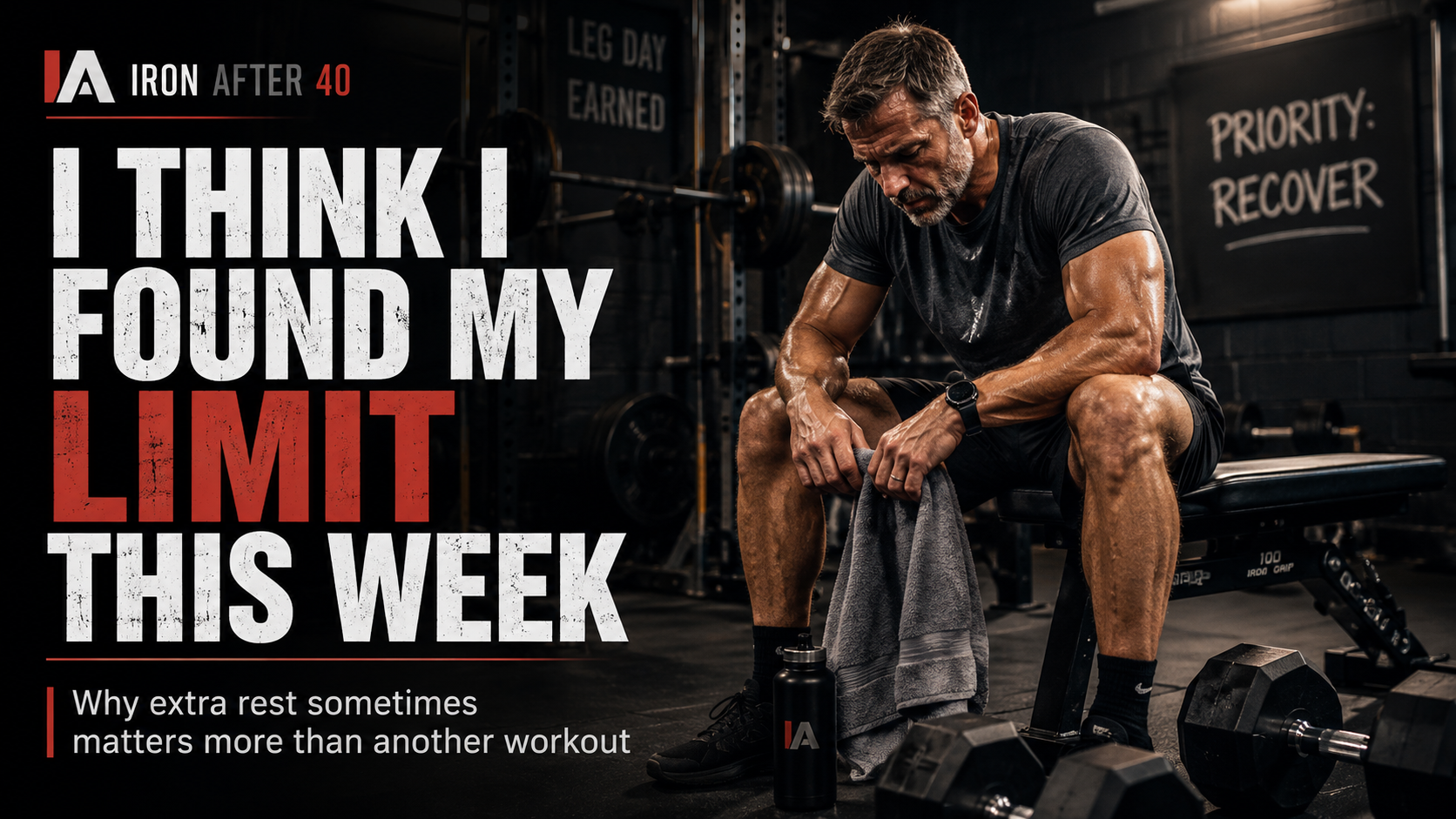
I think I found my limit this week.
Or maybe more accurately, I ignored what I already knew and got reminded of it.
Normally, I have a pretty specific flow to my training week. If I train chest and back one day, the next day is usually shoulders and arms. That works well for me. It gives me a hard upper body session, then a smaller muscle group day that doesn’t carry the same overall recovery cost.
This week, I changed that.
A buddy wanted to train legs with me, so I moved leg day up and put it right after a very hard chest and back session.
At the time, it didn’t seem like a big deal.
I’ve trained hard for a long time. I felt good enough. It was only one schedule adjustment. And honestly, training legs with someone else can be a good push.
So I did it.
Monday was a hard chest and back day. Tuesday turned into a very hard leg day. Wednesday was a rest day, so on paper, everything should have been fine.
But by the time Thursday hit, I still felt rough.
Not injured. Not sick. Not anything dramatic.
Just beat up.
That kind of fatigue where your body feels heavy, your joints feel a little more noticeable, and normal movement takes more effort than it should. If you’ve been training long enough, you know exactly what I’m talking about.
It’s not always one workout that gets you. Sometimes it’s how the week is stacked.
That was the lesson for me.
A hard chest and back session already pulls from the recovery tank. Then turning around the next day and hitting a hard leg session, especially with the kind of effort legs require, was probably more than I needed to stack back to back.
And the funny part is, I know better.
That’s what makes it a lapse in judgment more than some great mystery.
I didn’t get hurt. I didn’t do anything reckless. I just made a small adjustment that looked fine on paper, but had a higher cost than I wanted to admit.
That’s something I think matters more as we get older.
Years ago, I probably would have ignored it. I would have looked at the calendar, saw what was supposed to be next, and forced myself into the gym anyway.
Because that’s what we tend to do.
The plan says train, so we train.
And there is value in that. I’m not saying we should skip every time we feel tired. If that were the case, most of us would never stay consistent long enough to get anywhere.
But there’s a difference between normal tired and real accumulated fatigue.
Normal tired usually improves once you get moving. You warm up, the body starts waking up, and the session comes around. Maybe it’s not your best day, but you can still train productively.
Accumulated fatigue feels different.
It doesn’t really lift once you start moving. Warm-ups feel heavier than they should. Everything feels slower. Joints feel louder. Your motivation isn’t just low, your output is low too. You feel like you’re fighting just to get to the level you would normally start from.
That’s usually a sign worth respecting.
For me, one of the bigger red flags is when the body still feels rough after a rest day. That doesn’t automatically mean something is wrong. It just means the recovery demand was higher than one day could fully cover.
And that happens.
Especially after a few hard sessions. Especially after legs. Especially when life, sleep, stress, and everything else outside the gym are also pulling from the same recovery pool.
That’s the part a lot of people miss.
Recovery isn’t just recovering from training. It’s recovering from training on top of your actual life.
Work still counts. Stress still counts. Poor sleep still counts. Not eating enough still counts. Being busy all day still counts.
Your body doesn’t separate all of that into neat little categories.
It just has to recover from the total load.
So when fatigue is high, sometimes the smartest move is not another hard session.
Sometimes the smartest move is more rest.
That doesn’t mean the plan is falling apart. It doesn’t mean you’re being lazy. It doesn’t mean you lost discipline.
It just means you’re paying attention.
And honestly, that’s something I think more lifters over 40 need to get comfortable with.
Training hard matters. Showing up matters. Consistency matters.
But so does knowing when pushing harder is not going to create a better result.
There are days when an extra rest day will do more for your progress than another forced workout. Because if you push through fatigue at the wrong time, the next session usually isn’t productive anyway.
You end up moving less weight, feeling worse, irritating joints, dragging recovery out even longer, and sometimes turning one rough day into a bad week.
That’s not toughness.
That’s just poor timing.
On days like this, I’m not saying you need to do nothing. Sometimes doing a little bit of the right thing helps.
A light walk can help. Some easy stretching can help. A little soft tissue work can help. A massage, if you have access to one, can be useful too.
Not because any of those things magically erase fatigue, but because they can help you calm things down, move better, and shift your body away from that beat-up feeling.
The key is keeping it easy.
This is not the time to turn recovery work into another workout. It’s not the day to stretch aggressively, attack every sore spot with a lacrosse ball, or convince yourself that 45 minutes of mobility work needs to be intense.
That’s just another form of work.
The goal is to help recovery, not add more fatigue.
So maybe today is some light movement. Maybe it’s stretching the areas that feel tight. Maybe it’s soft tissue work on the quads, glutes, upper back, or whatever is carrying the most tension. Maybe it’s booking a massage. Maybe it’s eating well, hydrating, and getting to bed earlier than usual.
Nothing fancy.
Just giving the body what it actually needs.
That’s where I’m at today.
I did the work. I pushed hard. I also stacked the week in a way that probably wasn’t the smartest for me.
Now my body is telling me it needs a little more time before I ask more from it.
So I’m listening.
Not because I don’t want to train.
But because I want the next session to actually be worth something.
That’s the shift.
Sometimes you push. Sometimes you adjust. Sometimes you take the extra day and come back better.
And if you’re heading into the weekend feeling more beat up than you expected, it may be worth asking yourself the same thing.
Do you need more intensity?
Or do you need to recover from the intensity you already created?
That answer matters.
Especially after 40.
— Rob
Coach
Iron After 40