
Most Programs Don’t Need to Change
They need to be executed long enough to actually work
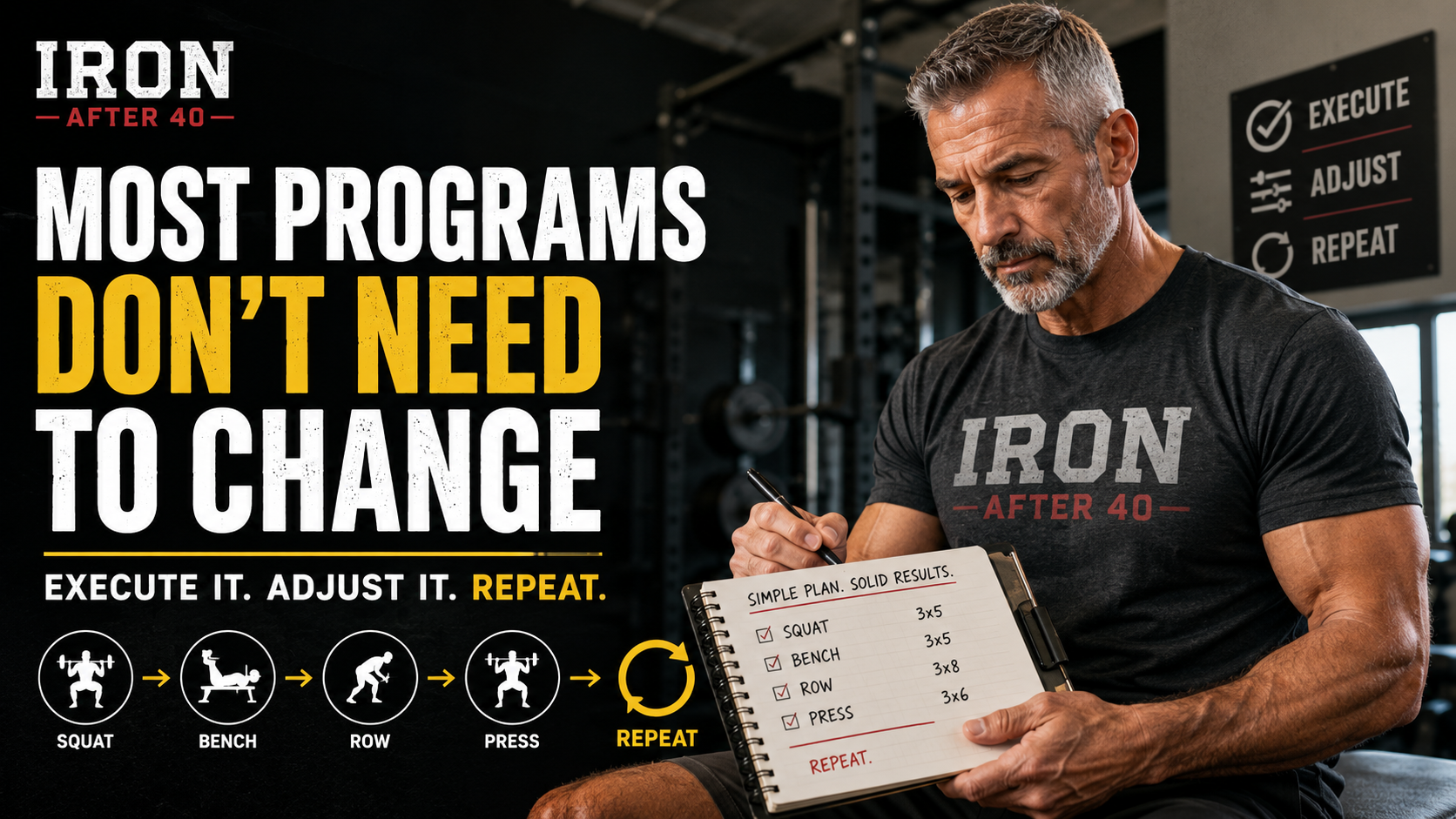
I’ve said this before, but I think it’s worth repeating. I’m not the kind of person who believes you need to constantly change your training program.
Honestly, I think most programs almost never need to change completely.
That probably runs against a lot of what people see online now, because everything is built around the next split, the next method, the next exercise rotation, or the next “better” way to train. There is always something new to try, and I understand why that’s appealing. Changing programs feels like taking action. It feels like you’re doing something productive.
But I don’t really see it that way.
If a program is built around good movements, enough effort, enough recovery, and some kind of progression, I think you can run it over and over for years and continue getting results. Not because the program is magic, but because the work is what makes it work.
That’s the part people miss.
They think the program is the thing producing the result by itself. It’s not. The program is just the structure. The result comes from how consistently you execute that structure, how hard you train within it, how well you recover from it, and how long you give it before deciding it no longer works.
Most people don’t give things long enough.
They run something for four weeks, maybe six, then progress slows a little and they start looking for a new answer. New split. New exercises. New rep ranges. New volume setup. New training style.
And I get it. It feels like a reset. It feels like you found a fresh answer. But a lot of the time, you’re not solving the actual problem. You’re just creating new variables.
Now you don’t know if the old program stopped working, if you stopped pushing hard enough, if your recovery fell off, if your nutrition slipped, if your sleep got worse, or if you simply needed to keep going.
That’s why I don’t like changing everything the second progress slows. Most of the time, I’d rather look at how the program is being performed before I look at replacing the program itself.
Are the working sets actually hard enough? Are the reps clean? Are you progressing somewhere, even if it’s slow? Are you recovering between sessions? Are the same movements still doing what they’re supposed to do? Are you eating in a way that matches the goal? Are you being consistent enough outside the gym for the training to actually show up?
Those questions matter more than people want to admit.
Because the truth is, a lot of programs are fine. They’re not perfect, but they’re good enough to work. The problem is usually not that the program suddenly became useless. The problem is that execution got loose, effort got inconsistent, recovery got buried, or expectations got unrealistic.
That’s especially true after 40.
Progress is usually not as fast as it used to be. You don’t always get obvious feedback every week. Some training blocks feel slow. Some lifts stall. Some body parts take longer to respond. Some weeks are just harder because life, sleep, stress, and recovery all start playing a bigger role.
That does not automatically mean the program is broken.
Sometimes it means you need to stay with it long enough to let it work. Sometimes it means you need a small adjustment. Not a complete rebuild.
Maybe one exercise needs to be swapped because it’s bothering your shoulder. Maybe volume needs to come down slightly because fatigue is getting ahead of recovery. Maybe a lift needs a different rep range because chasing heavy numbers on that movement is beating you up. Maybe you need a deload. Maybe you need to tighten your nutrition. Maybe you need to stop turning every set into a death match.
Those are adjustments.
That’s different from starting over.
And I think that distinction matters.
A good program should be stable enough to give you something to measure. If you’re constantly changing the plan, you never really know what’s working. You never stay with anything long enough to build skill, accumulate quality work, or see a clear trend. You just keep resetting.
That can feel exciting, but it’s not the same as progressing.
There’s value in repetition. Running the same movements gives you time to get better at them. You learn how to set up correctly. You learn what loads make sense. You learn what good reps feel like. You learn how close to failure you actually are. You learn what your recovery looks like from week to week.
That information is valuable, but you only get it if you stop changing everything every time training feels stale.
I’m not saying a program should never change. It should evolve. Over time, exercises may need to be rotated. Volume may need to move up or down. Rep ranges may need to shift. Recovery may require a different weekly setup. Goals may change.
But that’s not the same thing as constantly chasing a new program.
Most of the time, I think the better question is not, “What program should I switch to?” The better question is, “Am I actually doing this program well enough to know whether it works?”
That question will make a lot of people uncomfortable because it puts the responsibility back where it belongs. On execution. On consistency. On effort. On recovery. On patience.
And that’s not as fun as downloading something new.
But it’s usually where the answer is.
I’ve run the same basic training ideas for a long time. Push, pull, legs. Upper and lower. Chest and back. Shoulders and arms. Legs. The structure may shift a little depending on recovery, schedule, or the goal, but the principles don’t change much.
Train the muscle. Progress when you can. Recover enough to keep going. Adjust what needs to be adjusted. Repeat.
That’s not complicated, but it works.
And I think a lot of lifters would get better results if they stopped treating every slowdown like a sign that the entire plan needs to be thrown away.
Sometimes the program is not the problem.
Sometimes you just need to run it better.
Sometimes you need to run it longer.
Sometimes you need to make one or two small changes and keep moving.
That’s not flashy.
But most of the things that actually work usually aren’t.
— Rob
Coach
Iron After 40