
TRT Wasn’t the Answer I Thought It Would Be
What it helped with, what it didn’t, and why the work still matters
I’ll be 100% honest on my experience here.
When I first made the jump to TRT, part of me thought it was going to be the thing that finally made everything click. It was the solution that everyone was talking about. That magic bullet that would put me on cruise control.
More muscle.
Better recovery.
More drive.
Feeling like I was 25 again.
That’s not what happened.
Now, I’m not saying TRT didn’t help. It did. Just not in the way I originally thought it would.
The biggest change I noticed wasn’t some dramatic explosion in strength or muscle. It was mental.
At the time, I was dealing with some serious depression. Not just having a rough week or feeling a little off. It was heavy. There was a burden on my shoulders that I didn’t understand and had no power over. I can’t really place the moment it came into existence, but one day I woke up and realized that mentally, I was not doing as well as I let on to the world.
Getting my hormones into a better place helped clear some of that fog and for that alone, I’m glad I did it. But that’s very different from saying TRT built the physique for me.
It didn’t.
That’s the part I think a lot of men misunderstand right now.
TRT is becoming more mainstream, and I get why. A lot of guys over 40 are tired and looking for some kind of solution outside of chugging caffeine and carrying on.
Progress is slower.
Recovery isn’t what it used to be.
Body composition changes and gets harder to manage.
Motivation changes like the weather.
So, when testosterone starts getting talked about as the missing piece, it’s easy to pay attention.
I know I did.
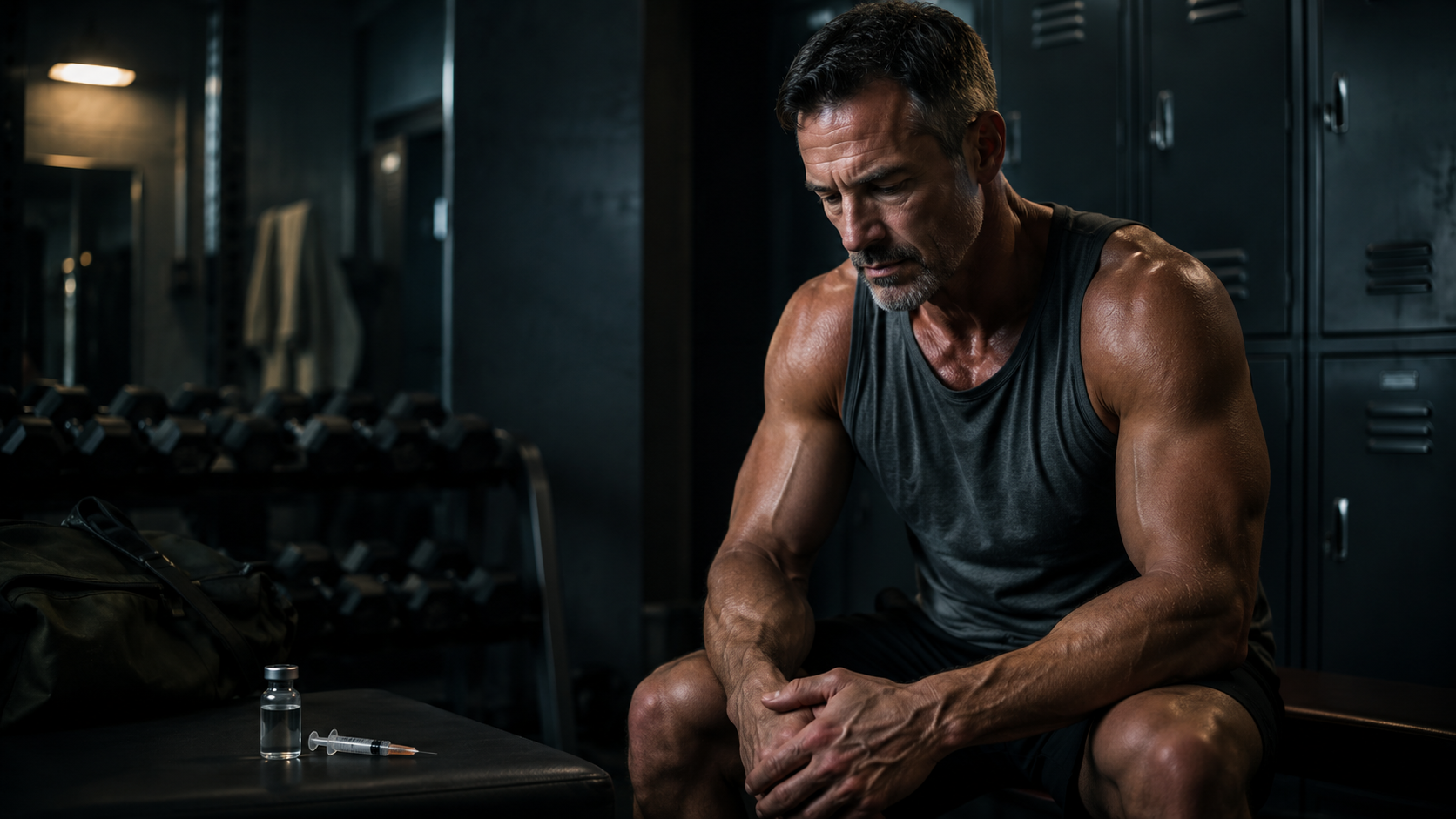
Now, sometimes, hormones really are part of the problem. If something is genuinely off, getting bloodwork and working with a qualified medical provider makes sense. I’m not against that at all. Quite the opposite. This is where you should start.
Where I think people get it wrong is they see and hear all the talk and advertisements and then expect TRT to fix things that TRT was never meant to actually fix.
It won’t fix inconsistent training.
It won’t fix poor nutrition.
It won’t fix bad sleep.
It won’t fix a program with no real progression.
It won’t fix years of starting over every few months.
TRT may improve the environment and help move things in a positive direction, but you still have to give that environment something to build from.
That was the lesson for me. Once my hormones were in a better place, the work still had to be done and it took me some time to realize that lesson.
I still had to train with intent.
I still had to manage fatigue.
I still had to eat in a way that supported the goal.
I still had to recover.
I still had to be consistent.
The basics didn’t become optional. If anything, they mattered more. TRT gave me the ability to recover from harder work, but I had to do the harder work to see the results. If the foundation wasn’t there, TRT wasn’t going to magically fill in the gaps.
That’s why I think the conversation around TRT needs to be more honest. For the right person, it can be a useful medical tool. It can improve quality of life and help bring someone back to a better baseline, but it is not a complete plan.
And it definitely isn’t a shortcut around the work.
The men who seem to get the most out of it are usually the ones who already have the foundation in place.
They’re training consistently.
They’re eating with some intention.
They’re sleeping as well as life allows.
They’re managing recovery.
They’re actually following a plan.
For those guys, TRT might support the process, but it doesn’t replace any of the steps in that process. That’s the distinction.
TRT helped me in a real way. It just didn’t do the work for me like I was led to believe from the ads, the Facebook chatter, and even the online clinics that I spoke with.
If you’re seriously thinking about TRT, I think the mindset you need to have going in matters.
It isn’t:
“This is going to fix everything.”
Instead, think:
“If this is medically appropriate for me, can it help support the work I’m already willing to do?”
That’s a very different question to answer and it will help clear the fog from your eyes before you jump into a lifetime of injections that you really don’t want to deal with.
The bottom line is, whether you’re on TRT or not, the foundation still matters more.
Training.
Nutrition.
Recovery.
Consistency.
That’s still where the physique gets built. That’s still where strength comes from. That’s still where true progress lives.
TRT might help some men feel better. It might help some men function better. It might even help create a better environment for progress.
But it won’t build something out of nothing.
You still have to show up.
You still have to train.
You still have to live in the habits long enough for them to compound.
That part never changes.
— Rob
Coach
Iron After 40
P.S. If you’ve ever been curious about TRT or want to know more about my personal experience with it, feel free to email me.
robert@rjmyrick.com