
The Warm-Up Counts Now
I used to rush it too
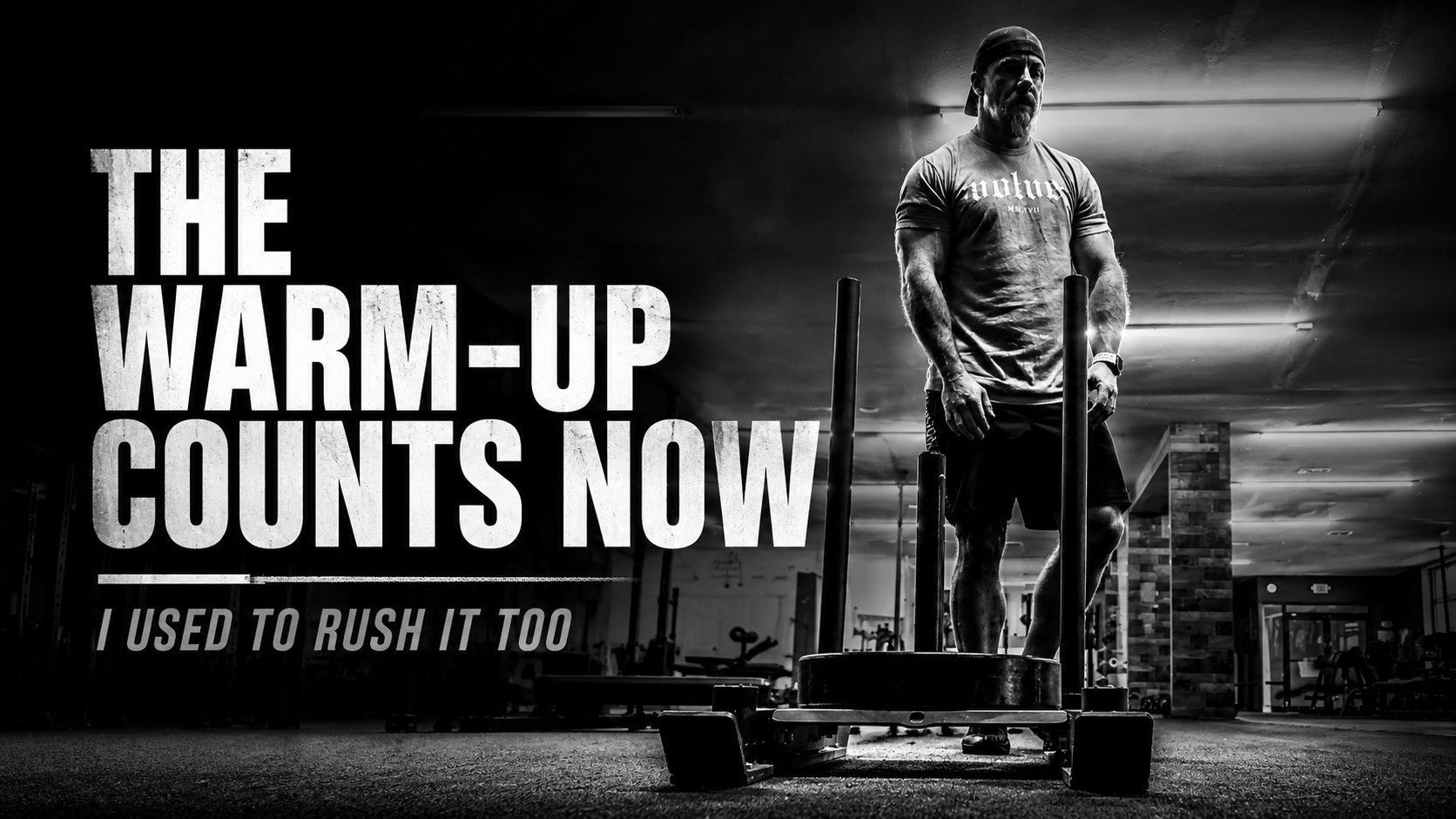
Coach Rob after sled pushes
I used to treat warm-ups like something I had to get out of the way.
A few lighter sets.
Get some blood moving.
Then get to the real work.
That was the mindset and for a long time, I could get away with it. Youth is wild like that.
Not anymore.
These days, I can tell pretty quickly when I’ve rushed the front end of a session.
The first working set feels heavier than it should.
Positions don’t feel as clean.
Joints feel a little more noticeable.
Everything just feels slightly off.
Nothing dramatic, just enough to know I didn’t give my body enough time to get ready.
Yesterday was leg day for me, and this showed up exactly the way it usually does.
I’ve got a ling history of mistreating my body physically. 12 years in the navy, running up and down ladder wells, in addition to all the ego lifting I did in my youth has come to haunt me. My knees hurt almost every time I train legs.
It’s not enough to stop me from training. It really isn’t debilitating, but it is enough to limit how much strength I can really express. It’s just one of those things I’ve had to accept and work around.
At this point, a lot of my leg progress has become more volume-based than strength-based. It’s not because I don’t want to push heavier. Quite the opposite. It’s simply because I have to earn my way into the session first.
I call it “getting the rocks out of the joints”. That’s what it feels like.
The knees don’t feel ready.
The joints feel sticky.
The first few movements feel rough.
Then, slowly, as blood moves in and the joints lube up, things start to open up. Usually, I start with set after set of walking lunges. No weight at first. The idea is just moving, getting blood into the area, and letting the knees settle down.
Eventually, once the pain starts to subside, I’ll start adding dumbbells. That’s been my base process.
Yesterday, I changed it up, thanks to some additions to my favorite local gym. Instead of starting with lunges, I went with sled pushes followed by sled pulls.
Nothing fancy. Just controlled work, steady movement, and enough resistance to get everything firing without beating me up right away.
I found that it made a huge difference. Much more than I realized.
By the time I got into the rest of the session, my knees felt better, my positions felt better, and I ended up having one of the best leg days I’ve had in quite a while.
It wasn’t because I found some magic exercise. It was because I took the warm-up seriously enough to find what my body needed that day. That’s one of those things that changes as you get older.
Not because you suddenly become fragile. But because the margin for error gets smaller.
When you’re younger, you can walk into the gym, throw a couple warm-up sets on the bar, and usually be fine. After 40, we all know it doesn’t always work the same way.
You may still be strong. You may still be capable. But your joints, connective tissue, and nervous system usually need a little more time before they’re ready to produce hard effort.
That doesn’t mean spending 30 minutes rolling around on the floor. It doesn’t mean turning your warm-up into a second workout. It just means being more intentional and paying attention to what’s going on within the body.
For me, a good warm-up now has a purpose. I’m not just trying to sweat. I’m trying to answer a few questions before I load anything heavy.
Does the movement feel cleaner?
Does the joint feel ready?
Is the pain settling down or getting worse?
Is the first working set actually going to be productive?
That last one matters because if your first hard set feels terrible, it’s telling you a truth that needs to be listened to. Either you weren’t warmed up enough OR your body isn’t ready for what you had planned that day.
Both are worth paying attention to.
A warm-up should help you make better decisions. Not just prepare you physically. Some days, everything feels good quickly. You move through your warm-ups, the weight feels right, and you’re ready to push. Other days, it takes longer.
That doesn’t mean the session is ruined. It just means you need to listen a little sooner. Maybe you take an extra ramp-up set. Maybe you adjust the angle. Maybe you back off the load slightly and focus on quality. Maybe you change the movement altogether.
That isn’t weakness. That’s training with some awareness. The goal is not to avoid hard work.
The goal is to make sure the hard work actually has somewhere to go. A rushed warm-up can turn a productive session into one you have to survive. A good warm-up gives you a better chance to train hard without forcing it. That’s the difference.
It took me longer than it should have to appreciate that.
If you’re over 40 and your sessions feel hit or miss, this is one of the first places I’d look. Not your split. Not your supplement stack. Not some brand-new program.
Just how you’re getting into the work. Because the warm-up counts now. Probably more than most of us want to admit.
— Rob
Coach
Iron After 40